
His Master's Voice
“Finished first Stanislaw Lem book "His Master's Voice"; unique, fun, like!”
— Twitter/X
View all 5 mentions

Director of AI at Tesla
“Finished first Stanislaw Lem book "His Master's Voice"; unique, fun, like!”
— Twitter/X
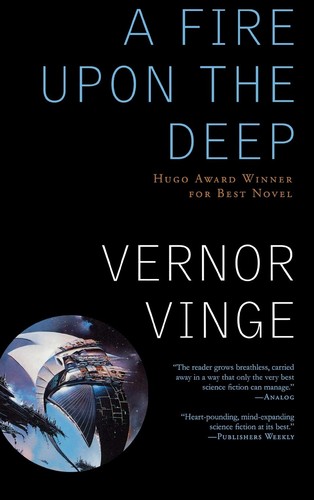
“Only chapter 1, describing a flowering Superintelligence, really awesome read. Later chapters went downhill.”
— Quorasessionwithandrejkarpathy.quora.com
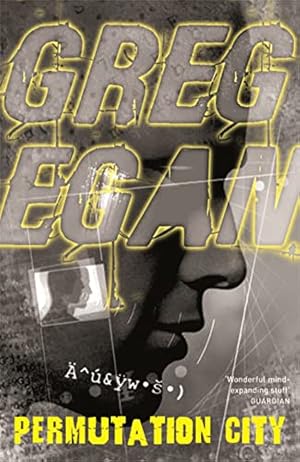


“Easily one of my favorite books ever - Nick Lane is an excellent scientist author, mixing engaging presentation, highly intriguing ideas, and tons of technical details. I learned a lot about origins of life and unlocked a whole new level of appreciation of the fantastic cosmic story every one of us is a part of, with all of the happy accidents along the way. 5/5”
— Goodreads.com
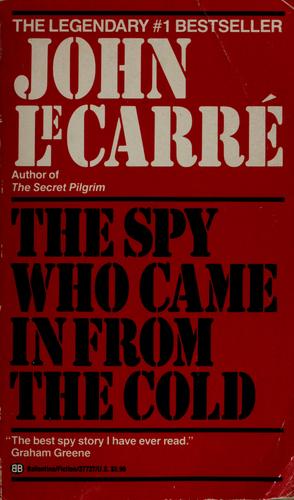
“@janexwang @notmisha I think Carl Sagan read His Master's Voice, then dumbed it down for general masses and gave it a happy ending.”
— Twitter/X

“The intro chapter of the Deep Learning book has a nice and thorough exploration of history and trends”
— Twitter/X


“Do you despise "sci-fi" featuring aliens with legs/faces/eyes/fur that highlight the author's intellectual shallowness at best or intentionally insult your intelligence at worst? Does your heart rate accelerate when a spaceship in a book/movie flies between worlds with a flip of a switch magical warp drive - ignore relativity - tech without any expectation that you might be puzzled by the blatant inconsistencies with the physical laws of our universe? If intellectually lazy pretend-sci-fi is not your thing, you will Love Stanislaw Lem, and you will love this book. Hop on a journey to the planet Quinta, and admire the mysteries of a beautifully-composed snapshot of a civilization that evolved along an entirely different path. Ponder the utterly naive notion that civilizations belonging to different regions of a society/mind space can share enough culture to establish effective communication. Admire the thought that informed the detail of each brush stroke and the consistency behind the”
— Goodreads.com

“Arthur C. Clarke's "Profiles of the Future" is a fascinating exploration of the science and art of predicting the future in the context of science and technology. Clarke first studies predictions made in the past and tries to identify common mistakes and patterns. Armed with some takeaways he then focuses his intellect and imagination on charting future progress from 1960 (when the book was written!) to 2100. Reading the book in 2016 puts us approximately in the middle of this interval; Clarke gets some things right and some things wrong, but what's interesting are the trends in which the mispredictions occur and the humbling realization of just how difficult predicting the future is. In particular, it is very clear throughout the book that Clarke is swept up in the 1950's era of excitement. Physical sciences were being completely transformed: X-rays, general relativity, quantum theory, the Manhattan Project, the splitting of the atom, our conquering of the skies (despite many predicti”
— Goodreads.com

“Ready Player One, which paints a likely future where large portion of the population spends time in VR in a Second Life - like environment. This is another example of sci-fi that has repercussions for AI research. Suppose this were true, how amazing would that source of data be, of millions of people interacting in real time in virtual worlds, etc. What does it enable? What kinds of techniques would flourish?”
— Quorasessionwithandrejkarpathy.quora.com

“I also liked Sutton’s Reinforcement Learning book, which I methodologically read cover to cover over few weeks and reimplemented a lot of in ReinforceJS.”
— Quorasessionwithandrejkarpathy.quora.com

“quite enjoyed, thanks (again) for another great recommendation!”
— Twitter/X

“On the topic of sci-fi’s I really like books written by scientists turned writers because I find the world building to be much more compelling, interesting and logically consistent. Recently I enjoyed [this].”
— Quorasessionwithandrejkarpathy.quora.com

“Brushing up on first third of The Hobbit (book), in preparation for our glorious midnight viewing tomorrow”
— Twitter/X

“I rarely give out 5/5, but this book was SO. GOOD. My usual complaints about many sci-fi books is that they spend a lot of time frolicking around with extended descriptions of vistas or facial features, or other basic literature mambo jambo. Instead, I am drawn to technical consistency, details and intriguing ideas. If you're like me, you will LOVE this book - it gets very nerdy very fast and stays that way for the entire duration of the book. The book offers a thrilling ride filled with science, calculations, and humor mixed in. There are many references to technical details spanning chemistry, biophysics, mechanical engineering, orbital mechanics, etc. The result is a believable and consistent backdrop that envelops the story. I had a lot of fun, found plenty food for thought, and I learned a lot! What else can you ask for? 5/5. 5/5”
— Goodreads.com

“Alien contact, but no. Can't recall exactly but something upset me about the treatment of AI in this book.”
— Karpathy.ai


“Alien contact sci-fi. Independence Day but friendly. With a twist. Humanoid aliens who speak English and have faces not super my cup of tea.”
— Karpathy.ai

“A dying man leaves behind a distributed set of daemon programs that infect the world, acting collectively as a kind of superintelligence. Unfortunately, the book lacks in logical consistency: Wait, the program can run a large chunk of the global economy, reads minds with complex invented equipment, and operates a fleet of self-driving vehicles with complex sensing and yet when it speaks to you you must answer either yes or no or otherwise it cannot parse your response? The book also lacks in pacing, with long stretches that become boring or tedious. The real objective of the program is not revealed for a long time, and even once it is, it’s not very convincing and a letdown. The ending is abrupt and the story doesn’t build up into anything. It feels as though the author became tired of the story and just wanted to finish the book already. Inconsistent, tedious, and ultimately unsatisfying. 2/5. 2/5”
— Goodreads.com
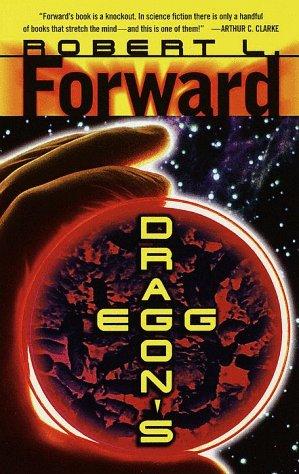
“Highly inventive and fascinating alien contact. A little too long.”
— Karpathy.ai

“Read a very long time ago, remember really enjoying select parts having to do with a highly mysterious superintelligence. Note to re-read.”
— Karpathy.ai

“A man undergoes a procedure to increase his intelligence. Inventive, clever, interesting.”
— Karpathy.ai

“This book was exactly what I am usually most afraid of: a "basic" sci-fi written by a non-technical author. It is a nicely written tale with grandeur whose primary focus are people and relationships, and oh, it happens to be set in the future. If you enjoy reading flavored and elaborate descriptions of sunsets, environments, or people's facial features with a few scattered mentions of different solar systems here and there (so that it qualifies as a sci-fi), this book is for you. But if you're interested in exploring possible futures, with a specific focus on ideas, technologies and their consequences in a consistent and elaborate universe, you'll get bored very quickly. 2/5”
— Goodreads.com

“Highly enjoyable world-building set in a Neuralink future.”
— Karpathy.ai

“This is a humorous medium-ambitious space opera sci-fi. As far as ideas and world building go, I enjoyed some of the concepts (e.g. "smart blood"), but found others highly naive / dubious (silly biological aliens, etc). The story is enjoyable, but doesn't try too hard to wow. Overall, a satisfying bite of a story-driven sci-fi if you can forgive the unrealistic universe. 3/5”
— Goodreads.com

“It’s an intermediate level resource like I mentioned. I’d first read the book, then read this and write the whole thing from scratch, then on the second reading you learn a lot.”
— Twitter/X

“Nerdy, quirky and fun! The characteristic Andy Weir - style enthusiasm and glee over science permeates the plot. The challenges of the plot are met by one of the most unique and entertaining partner duos I've seen. The book doesn't shy away from a technically elaborate, interesting and engaging portrayal of an alien species. 4/5”
— Goodreads.com

“I thought I would really enjoy this book: a problem of epic proportions, a struggle for survival through science/technology... Unfortunately, this book is like taking The Martian, removing many of the best parts (humor, compelling characters you actually care about), and then making it (what feels like) 10 times longer. It's dry, it lacks focus, pace and clarity. For example, I was frustrated to read about Dinah's problems with her robots or other trivialities when the entire plant Earth downstairs is about to burn. We just barely get to learn something about how the social order copes with the impending doom - a copout. In the end I couldn't take it anymore so I skipped through some of the later parts and then read the synopsis on Wikipedia. More importantly, this experiment confirmed to me that I loved the The Martian not just because it was about science and had lots of nerdy details, but because it was legitimately a fun, interesting, compelling and _appropriately sized/paced!_ sto”
— Goodreads.com

“Another genuinly interesting treatment of an interesting alien from Lem. A little too frustrating/tedious to read in all other aspects.”
— Karpathy.ai


“Struggling hard to finish the superintelligence book. One 2 chapters left. Must... be... strong...”
— Twitter/X

“This book offers a great overview of issues surrounding Energy policy in the UK (and the world). There is a lot of analysis of the various renewable energy sources and their potential of helping us replace fossil fuels over the next few decades. Economics of every choice is only briefly touched on, however. Still, the book offers a nice and fairly exhaustive exploration of our options and lays out most of the issues surrounding the implementation. David MacKay (author) is also first and foremost a revered scientist who studies this because he cares, which in my view makes him easier to trust on facts, figures and opinions. 4/5”
— Goodreads.com

“I understand that some of the book's content has appeared in Dan's Hardcore History podcasts, but since I've only listened to a sparse few a lot of the book was relatively new material to me. I thought the premise of the book was excellent: Things look quite good right now and it's hard to imagine civilization regressing substantially, but history is filled with examples of exactly that over and over again. Just how optimistic should we be today that we can avert the same fate? I expect that Dan could write an excellent book laser focused on exploring this, but while the book does do a bit of it now and then, more often than not it also distracts itself and goes off on tangents of what feels like filler / irrelevant content. For example, we're discussing the Assyrian empire, the Roman empire and their fall, but then we also randomly learn a little too much of the treatment of children in history, or the details of various bombings during the second world war. What is the point of thes”
— Goodreads.com

“A twisted, raw, curious portrayal of a future with an AGI gone... mixed.”
— Karpathy.ai


“To someone well-versed on education discussions, this book contains a lot of obvious. I feel like most reasonable people will nod along as they read this book without much disagreement, as a lot of it is not very controversial. For example, a very "insightful" chapter spends several paragraphs getting the point across that some kids learn differently from other kids, or at different pace. The parts I did find interesting were first, Salman's historical account about some of the beginnings of Khan Academy, and second his vision for the ideal classroom (even though it was only discussed in a few rather vague paragraphs). I am a fan of Khan Academy (their mission, not their current execution), but I did not get very much out of this book, so 3 stars seems appropriate. 3/5”
— Goodreads.com

“At one point there were some alien females wearing jewels and I just couldn't continue. A good example of sci-fi where my taste departs from popular taste. I simply cannot tolerate or accept antropomorphic aliens, it makes me angry.”
— Karpathy.ai


“This book was a drawn-out, tedious read that I was in danger of aborting several times until it finally pulled off a miraculous redemption in the last few chapters. I was going to give it a 2/5 when I was 90% through the book, but having read the last 10% I'm happy to upgrade that to 4/5 and looking forward to reading the 2nd book. 4/5”
— Goodreads.com
“It's beautiful and the closest I've read to what it may think like to be a superintelligence.”
— Twitter/X

“Cartoony characters bickering with each other while exploring naive notions of Universe and alien life.”
— Karpathy.ai

“I read this as part of the Mark Zuckerberg book club :) Why are some nations rich and some poor? Is it geographical? Cultural? This book argues that, to a first order approximation, it is the economic and political institutions that influence this property, based on whether they are inclusive and pluralistic, or extractive, where a small elite rules over the population. The book goes over many examples of countries/regions throughout history, e.g. Maya, Rome, Venice, France/Spain/Britain/New World, and in modern days the focus is around South America, North vs. South America, Subsaharan Africa, and China. In each case, the authors point to the institutions as the source of the divide. In short, throughout history, small number of rich and powerful people have incentives to keep it that way. They do this by keeping the population misinformed (e.g. media control), conservative ("keep everything as is"), and by explicitly avoiding creative destruction that is core to sustained progress, b”
— Goodreads.com

by George Orwell
“A bit too much of a caricature but very enjoyable. A little too real. Newspeak”
— Andrej Karpathy Recommended Books – Best List to Read


“this book is a mixed bag. You really have to selectively skim chapters that look interesting because you will never make it fully through. I thought some of the chapters had some very interesting results, however, and the notion of a computational universe is very intriguing and interesting. 4/5”
— Goodreads.com
“interesting read, glimpse into how theory of GR developed”
— Twitter/X

“Actually I was reading the book "A Poison Like No Other: How Microplastics Corrupted Our Planet and Our Bodies" just last week. I didn't realize the extent to which plastics have come to permeate and mess with our entire environment. It's not just about the polymer granules of…”
— Twitter/X



by Michael F. Land
“randomly triggered while reading Animal Eyes, which is quite excellent”
— 7 Book Recommendations by Andrej Karpathy

“Since a few people asked - I rated 2/5 not because of the implied philosophy (which I am obviously sympathetic to), but because the actual presentation is overly cartoonish, 10X too long, and highly tedious. 2/5”
— Goodreads.com



“I read this a while ago but I can't remember it being a very spectacular or enjoyable read. Disclaimer: I took chaos mathematics at school so I was reasonably familiar with most presented concepts, which could have made it a little more boring. 2/5”
— Goodreads.com


“I appreciate what Ed has tried to do with this book, and I'm a fan of his and Pixar. It was an enjoyable read, but if I was to complain about something it's that I felt the book was trying to be contrarian quite often in a slightly forced way. I ended up noticing a formula repeated many times: In this situation most people would think X... (I didn't, and I wasn't fully sold that most would), but I think Y (I agree and I've heard something similar said several times before). Of course, there was a distribution of reactions to these statements - some I thought were relatively unique and interesting (e.g. negative spaces in art, a well-articulated defense of errors), and some were somewhat forceful (e.g. do not resist change - okay, thanks). I could also notice a persistent undertone of pride for Pixar employees, with statements such as "Do you see now why I love to work here?". Somehow I have slight negative reaction to it. I understand he's very excited and Pixar is his baby, but for m”
— Goodreads.com

“I finally finished the Three Body series, as a result of enthusiastic recommendation from several friends, but I emerge disappointed, and even perplexed about the scale of the discrepancy in people’s reception of sci-fi. TLDR: there are several fantastic diamonds of novel ideas sprinkled around, but they are mixed in with a very large mass of goo, full of soulless characters, narrative/logical inconsistencies, poor choices of what to expand on and what to omit, and a really disappointing conclusion. Okay lets get more concrete. **Spoiler alert.** I loved the grand scope of the story - the idea of a dark forest universe (a fun semi-resolution to the Fermi paradox), new physics (although the dimensionality manipulation was stretching it), the idea of fundamental physics as a weapon or a defense (e.g. space folding, or “slow fog”/dark domain), and the idea that there is a huge technological disparity between different civilizations. I also really liked that the story spans a huge amount o”
— Goodreads.com


by Frank Herbert
“Love the world building (e.g. the lore behind the deliberate absence of any AI), dislike everything else”
— Andrej Karpathy Recommended Books – Best List to Read

“This was my second read of an Einstein biography, this time by Isaacson. Coming from Isaacson, the book is well-written and seemed very thoroughly researched. Overall a great read, but if I had to complain my biggest issue is that the emphasis was not allocated very well. For instance, a huge portion of the book is devoted to Einstein’s personal life, reading through his correspondence with his love interests. It’s interesting for a while, but after some point I thought we were intruding a little too much, and that it was stretched out and uninformative. Conversely, some very interesting portions of his life are under-represented. In one chapter he publishes his streak of 1905 papers, and in what feels like a few pages later he is a scientific celebrity. This period, where the community is discovering and processing him as a person from nowhere who made sudden and large contributions is among the most interesting, and very sparsely covered. There could have also been much more space fo”
— Goodreads.com







“This book reads like the author read a number of popular science articles, watched some sci-fi movies, attended a transhumanist meetup, got just a bit high on weed and then started writing. 2/5”
— Goodreads.com


“I love this book and I've recommended it a number of times because it charts its way through the space of self-consistent philosophies for life, none of them strictly right or wrong. I love the idea that, as miraculously conscious entities that we are, we experience a kind of awareness and are empowered to adopt a philosophy and a system for life. This book is an enumeration of ways of being, view on life and its purpose and morality. For me the enumeration in this book is only a step 1, and has given me a lot of food for a more fundemantal theory. E.g. a slider that controls how much you care about people at a different radius away from you (you alone, family, community, all people alive, people alive in the future), how you measure the distance function (e.g. proximity/genetics), and over what time (e.g. right now or in the future and how far). Or how much you value hedonism vs. meaning. Or whether your sense of worth/meaning is more internally or externally driven. Etc. But the 27 a”
— Goodreads.com

by Jerry KaplanThis book provides a decent e
“This book provides a decent exploration of the future of automation. The first part of the book talks about AI/Machine Learning. This may have been a decent intro for someone completely new to the field, but for someone very much inside the field it was a little frustrating to read because of explanations that I think confused concepts in artificial intelligence, sometimes for example using the terms "machine learning" and "neural networks" interchangeably. I was also put off by some silly examples of what the future looks like, such as "Trying on an outfit? Instead of asking a sales assistant if you look nice, why not take a snapshot of yourself and seek crowdsourced opinions?". To me, these silly and quite speculative examples of small use cases give off too much of a singularity hype hype vibe. The later part of the book is where things finally take off and the book goes into some social-economical repercussions of automation and the likely more dramatic income inequality. This is”
— Goodreads.com


“Good & quick to the point reading”
— Twitter/X


“2/5 ("it was ok"). I'm already on Keto+IF and enjoying it quite a bit so I got this book to collect more data about how/why the diet works, and some details on how to maximize its benefits. Unfortunately what I found was a seemingly hastily put together high-level hodge podge of related information that is breezily presented and then re-iterated a few times over and over, as if repeating the same high-level points would make a person understand things better. The book can't decide if it's a popular science book or not, and awkwardly ends up a bit of both. The un-cliffnoted version could earn more stars. 2/5”
— Goodreads.com


“I got the impression that this book was primarily intended for women, but it was an interesting read for me nonetheless because it explores a variety of barriers, issues and concerns that women face as they progress through their careers. Barriers that are, at least to a white man, not immediately obvious. I liked that Sheryl supplements her arguments with a variety of anecdotes from her and her friends' personal lives. These make the exposition more authentic and enjoyable. There are also a number of interesting passages that address topics of leadership and communication in general. One of my favourites that comes to mind was a passage about the relativity of truth, and how one can more effectively communicate with others when this is recognized (Seek and Speak your Truth chapter, page 79). I've also developed a certain admiration for Sheryl that this book helped reinforce. As she explains in the book, you can't have it all, but she clearly has a strong drive to come as close to it a”
— Goodreads.com

“This is an engrossing, well-paced biography that is a pleasure to read. I'm left with a deep and motivating admiration of many facets of Leonardo's character, especially his eager mind, attention to detail, thinking from first principles, his use extensive use of physical notebooks, and, most intriguingly, his use of art as a thinking tool. It's fascinating to get a glimpse of someone so far ahead of his time, and it's fun to think about what he would make of today. 4/5”
— Goodreads.com

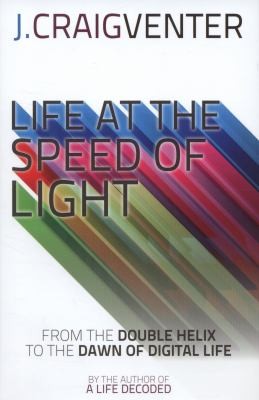
“The book covers a brief history of the discovery of DNA as the "software of life", the work that went into the sequencing of it (read), the ability to synthesize it (write), the process of introducing it to a host cell (boot), and speculations about what all of this technology means for the future. The book does a pretty good job answering the question of what the sequencing of the human genome looked like "on the ground" for the people involved, and gives a good sense and quite a few details into what kinds of problems there were along the way and how they were being resolved over time in the process of science/engineering of the achievement. I thought that the core thesis of the book "life at the speed of light" was a bit of a stretch. At one point, I wasn't sure why, a number of pages are devoted to teleportation in Stark Trek and then quantum entanglement and quantum teleportation. This is one of my favorite pet peeves because I believe I think it really confuses the public (we're”
— Goodreads.com

“I guess I was never smart enough to "get" this book. I was forced to read it by my English teacher and it was ... meh. 2/5”
— Goodreads.com
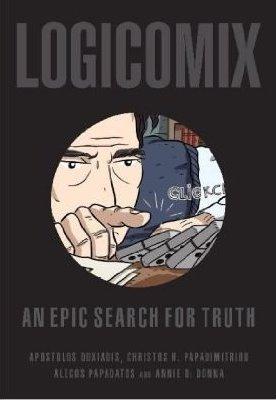
“Soooo good. A very fun graphic novel about people and their maddening quest for foundational mathematics and objective truth. The novel does a great job at faithfully portraying and expressing the obsession for solving these fundamental problems that consumes great minds. And no wonder-- it is written by mathematicians! 5/5”
— Goodreads.com

“I am re-reading LoTR again”
— 349 books Andrej Karpathy mentioned, ranked!


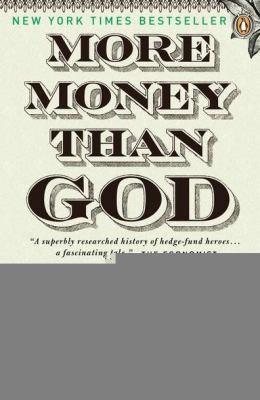

“Once in a while you read a book that shatters your preconceptions and updates your world view. In the wonderful "Narcoeconomics: How to Run a Drug Cartel", Tom Wainwright (an editor at The Economist), explores the narcotics industry through an economic lens. You'll see how drug cartels are much more like McDonalds or Walmart than you previously thought: optimizing their supply chains, competing, forming mergers, colluding, worrying about human resources, public relations and brand building, offshoring, franchising, investing in R&D, dealing with rise of disruptive online marketplaces, diversifying (kidnapping, prostitution, human trafficking). You'll see flawed prison systems much more as recruiting grounds, jobs fairs or networking events. You'll see full-body tattoos as an employee retention strategy. By the end of it, you'll emerge with a more complete and coherent picture of the narcotics industry and its dynamics, understand why Nixon's war on drugs has been so ineffective, and ma”
— Goodreads.com




“Isn't particularly thorough or convincing but gives a quick intro to many regions of the world and some of their history (e.g. Russia, China, USA, Western Europe, Japan+Korea, Middle East, Afric, Arctic ). Unlike the title's claimed focus, geography is not featured as prominently and we're mostly treated to a quick history lesson of each region in turn; i.e. I'm not sure that I learned all that much about how the geography of each region influences that history. In summary, a decent intro to the topic but doesn't present any particularly coherent, well-supported theme, and instead meanders around as a summary of the first 3 paragraphs of each region's "history" section in Wikipedia. 3/5”
— Goodreads.com


“Sapiens offers a good overview of broad trends that have shaped the human civilization from prehistoric to modern times, but suffers from inconsistent assumptions about its target audience and, due to its scope, an abundance of high-level statements that don’t connect. My chief criticism of the book is that it does seem to address a consistent audience. One minute the book discusses and explains a broad trend (e.g. the empire, or capitalism) and then abruptly dives into very specific examples from history to support its statements (e.g. a briefly alluded to specific battle during the expansion of the British empire). The problem is that as an ordinarily-educated person, I am familiar with the basic ideas such as capitalism so these sections bore me, but I am not at all familiar with the details of specific conflicts or related circumstances. As such, I spent the majority of the book either bored, or confused and overwhelmed with information that was seemingly assumed. Overall, the book”
— Goodreads.com




“I found this to be a frustrating read because every story featured ridiculous metaphysical stuff that can't possibly be made consistent or interesting. The entire notion of afterlife is intellectually flawed from the get go, so I feel that the author has made a mistake in the very premise of the book. A more interesting book would be something like "forty tales of how we got here", where he could describe possible ways we got here to the present moment without needing any mention of afterlife. Some of them could be metaphysical mambo jambo involving god(s) of various forms, shapes, sizes and colors (and afterlife, possibly) but a larger portion could be about more plausible scientifically-consistent possibilities, more along lines of abiogenesis and similar. I was going to rate it a 1/5 but two stories I thought contained semi-interesting ideas were "Microbe" and "Reversal". 2/5”
— Goodreads.com
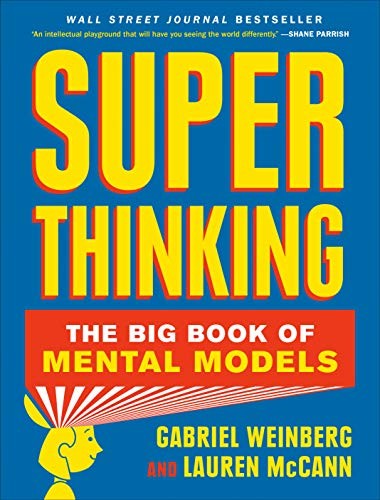



“One of the best compact pieces of insight into the nature of progress in AI.”
— Twitter/X


“Similar to the previous book in the series (Three Body Problem), this book is a mix of diamonds of interesting ideas sprinkled around a mass of gray, featureless goo that the reader has to painfully wade through. Some parts are not too logically consistent or believable, some parts are annoyingly spurious, some parts are annoyingly fast, but similar to the first book, some parts are ambitious and interesting enough that the whole is worth a read. I liked it (3/5), but why does it have to be so painful? Apparently the third one is Even longer. I hate it, but I'll probably read it. *cries* 3/5”
— Goodreads.com
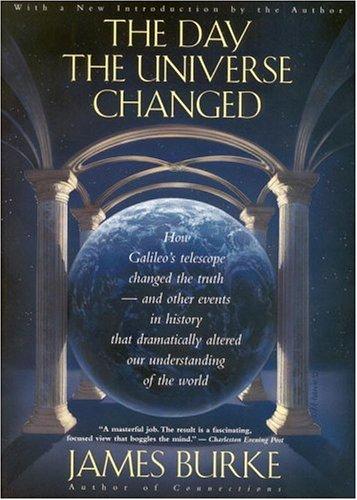

“This book examines positions of power (e.g. country leadership, mayors, CEOs, deans, etc.) by assuming entirely self-interested actors who seek to gain and retain power, and argues through examples that this relatively simple model gives the first order explanation of many world events. If you really grasp the message you'll adopt a much more cynical world view, but you'll also stop torturing yourself over stupid questions like what a country "ought" to do, what is "right", or why the people in power just can't see it. At the same time, spending some time in reality will reveal ways of remedying various suboptimal situations (e.g. the inefficacy of foreign aid) with solutions that recognize the root cause and manipulate incentive structures of those in power. The book supplements its thesis with various examples. For instance, resource-rich autocracies with small winning coalitions tend to oppress the population, which is irrelevant to the revenue needed to retain power. Conversely, th”
— Goodreads.com


“I read this quite a long time ago but I remember it being an interesting account of what science looks like from the trenches. The struggles, uncertainty, the thrill of the race with other labs. It also paints a realistic picture of discoveries: it's not one sudden eureka moment that changes everything but a process of gradual narrowing down of the truth with a sequence of smaller eureka moments in between. 4/5”
— Goodreads.com

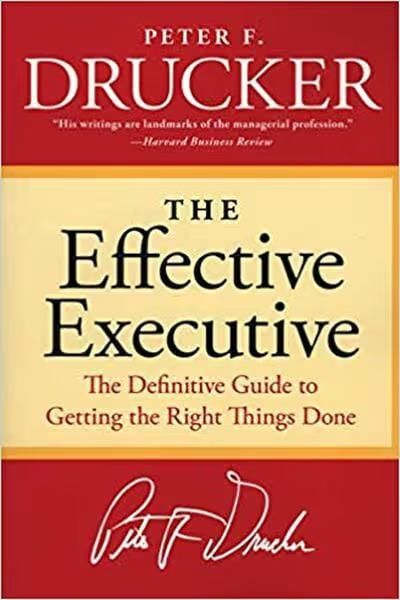
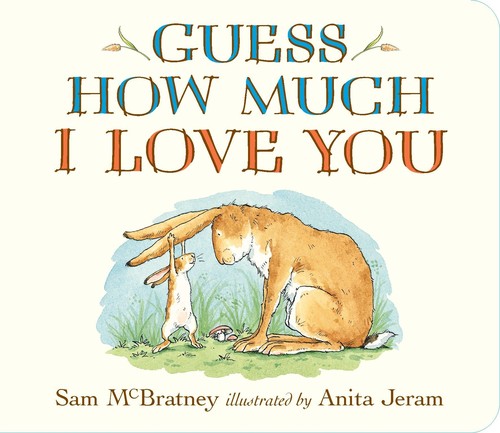


“This is the story of Amazon.com and how it became a ~$500B company. The book is fun and engaging to read. The chapters focus on painting a picture of Jeff Bezos and his philosophy, and the various adversities that the company has faced over its 20 years of existence. I am generally not a huge fan of worship-fiction (which is very common when it comes to books about "visionary founders"), but luckily this book is only about 50% that. The other 50% is a genuinely fun read about Amazon's beginnings, struggles, and its now-sprawling empire from a high-level business perspective. My favorite parts included: 1) the clear-headed analysis that went into the original spark behind Amazon, 2) the repeating pattern of the "flywheel" positive feedback loops that was the energy source of Amazon's growth, 3) the amusing inability of the incumbents to realize what was happening and how to address it, and finally 4) the anecdotes related to all of the above. good/fun read. Would recommend to anyone in”
— Goodreads.com


“This book offers a comprehensive and engaging overview of genetics. It includes the history of the field, anecdotes of its development, a well-paced technical explanation of the high level aspects, and quite a lot of discussion on the associated moral dilemmas that we are faced with as we understand how we can use this technology to change our own species. Unfortunately, the book does not delve into some of the aspects of modern genetics that I find most interesting, such as gene drive. These are discussed near the very end almost as an afterthought, and are hardly given enough focus. Similarly, epigenetics is only briefly touched on. Lastly, the book is very human-centric and does not discover genetics in a broader context of evolution in animals (e.g. selfish genes), which I find fascinating. Overall, this will likely become my default recommendation for the reference Genetics book for a general interested reader who is mostly interested in the history of genetics, who enjoys thinkin”
— Goodreads.com


“The author does a good job of verbally sugar-coating an otherwise boring story about an obsessed bootlegger and his unstable acquaintances. A book perfectly suited to teach helpless K-12 children to value prose over content and that unfaithfulness and obsession lead to despair and death. 2/5”
— Goodreads.com
“This book is a relatively short whirlwind tour of some aspects of the history of money, presented chronologically from antiquity to approx. 1997, when this book was published. Basically, due to a number of properties of asset creation in society (e.g. role of skill/expertise, need for up-front investment in production, batch efficiencies, etc.) various assets regularly end up in surplus or scarcity for any one person or organization, leading to a need for some system of exchange. Money fills this need and becomes the scalar signal that communicates scarcity across society in an emergent, decentralized manner. The book goes over multiple forms of money that have existed over the course of history stopping by different places of spacetime in each chapter. It touches on gift economy and debt in small societies in presence of trust, barter in cases of lack of trust, early commodity money that typically has intrinsic value and is a convenient means of exchange (e.g. cacao seeds used in the”
— Goodreads.com




“I could not finish this book because it is a little too long and too detailed, making the "bang for buck" ratio slightly too low for my liking. It is a relatively pleasant read, but I also thought that the author assumed too much about what the reader knows regarding public policy, politics, and so on. Many times I felt myself lost in the subtleties of the politics that was unfolding, and there was no decent attempt made at explaining the situation more clearly.”
— Goodreads.com






“I could not bring myself to finish this book. The book is filled with shady experiments on undergraduates and psychology grad students and wild extrapolations of the associated results. I find it exceedingly difficult to take many of the conclusions seriously. I can't read into them. I can't trust them. I can't base my decisions on them and I resist incorporating them into my world view with anything more than 0.01 weight. In fact, several of the experiments that this book mentions were also found to be not reproducible by a recent meta-study on reproducibility in psychology studies. Here's a characteristic example of me reading the book. The author says: "Consider the word EAT. Now fill in the blank in the following: SO_P. You were much more likely to fill in the blank with a U to make SOUP than with an A to make soap! How amazing. We call this phenomenon priming, system 1, something something". In fact, no, SOAP came to my mind immediately. All I could think about when I read this bo”
— Goodreads.com




“David Marr proposes a complete framework of how the brain could process visual information from 2D image all the way to 3D geometries at the very end. Even coming up with a not-obviously-wrong hypothesis of this entire pipeline is no small feat and David almost makes it sound consistent and as if it could work if it was only implemented with a few details filled in here and there. I do wonder if he was slightly ahead of his time, I'm sure he would have loved to play around with Kinect RGBD videos :) 4/5”
— Goodreads.com


“There are several good parts in this book and I've felt some of my views shift as a result of reading the book (which is all you can ask for). A lot of Peter's arguments are supported with examples and anecdotes which is great because it grounds the discussion, but I also kept thinking that some seemed cherry picked. In a pool of 20 successful companies it seems it would be easy to always find the one that fits a narrative. Regardless, interesting read; These are useful ideas to be aware of. 3/5”
— Goodreads.com



by Harold Abelson and Gerald Jay Sussman with Julie Sussman

by Trevor Hastie, Robert Tibshirani, and Jerome Friedman

